



Rs. 1,499.00
Rs. 1,800.00
Rs. 599.00
Rs. 699.00
Rs. 599.00
Rs. 999.00
Rs. 699.00
Rs. 1,199.00
Rs. 899.00
Rs. 1,200.00
Rs. 1,999.00
Rs. 2,400.00

I have been into fitness for close to 20 yrs and tried various supplements. The effectiveness of the Gataca's NMN is outstanding. Post taking NMN my metabolism shot up, recovery was quicker, inflammations reduced and immunity increased significantly.

I would say the best NMN in India. I’ve tried other brands, only Gataca’s NMN give me all the much talked about benefits of NMN. I'm able to live better, play ball and pickle ball for longer. The best in India for sure!
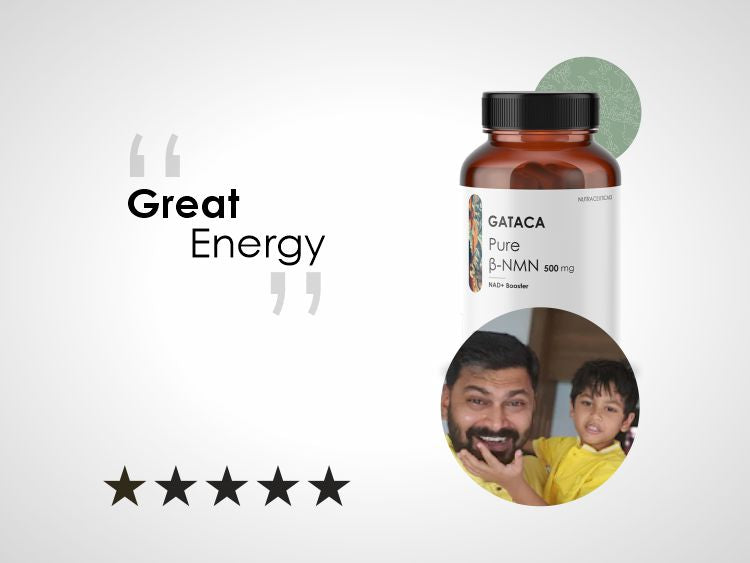
I started feeling the energy from the first day. I don’t get too much downtime at work and I need to be alert. Gataca’s NMN helps me stay focussed and highly productive. I’ve tried a few other brands but this one really did it for me. Highly recommend it

I tried a couple of different brands and tested out their efficacy and I found Gataca’s NMN to be the most effective. :) NMN (coupled with intermittent fasting and regular exercise) has turned me into a different beast altogether.

I have noticed a significant increase in my energy levels since incorporating Gataca's NMN into my daily regimen. This supplement has proven to be more effective than others I have tried and has enabled me to maintain a high level of productivity throughout my daily tasks.

Remember that day! You woke up feeling all the energy in the world. You did not
procrastinate. You dominated the tasks you set out to do and finally went to bed feeling you made the world a better place.
We’re being a bit dramatic, but you know what we are talking about.
You performed at your peak! Now imagine a whole week like that, a year or a lifetime
like that day!
Peak performance matters and the only way to achieve this is by driving your body
with the right mix of fuels.
Most Indians find themselves navigating through hospital corridors in the last decade of their lives, depleting hard-earned savings as their quality of life falls dramatically. We’ve seen this, growing up, our parents looking forlorn while they navigated doctors’ opinions, treatments and hospitals. This “hospital-chasing’ model of health is inescapable across the globe.
But it doesn’t have to be this way!
By taking care of your health now, you can live & live well into your 80s & 90s!
Longevity isn't just about adding years to your life—it's about enhancing the quality of those years.
It all starts with a decision to live healthier. Think of your body as a car—your car! You add premium fuel to get around, keep it clean, and never miss service and maintenance dates.
But do you treat your body the same way? You wouldn’t add
kerosene-laced fuel to your car, but you consume unhealthy foods. You clean
your car daily but neglect the inner workings of your body. You never skip a service appointment, but do you have a yearly schedule for preventive health
check-ups?
Just like your car, your body can be tuned for peak performance, to give you the
best mileage, (yearage?)…
longevity!


Harvard professor and leading expert in aging, known for his research on sirtuins and NAD+ in longevity.

Renowned for his work on fasting and the development of the Fasting-Mimicking Diet to promote longevity.

Nobel laureate, famous for his discovery of induced pluripotent stem cells (iPSCs) with implications for regenerative medicine.

Longevity researcher focusing on caloric restriction's role in extending lifespan and preventing age-related diseases.

Stanford neuroscientist who shares insights on brain function and performance optimization through his 'Huberman Lab' podcast

Functional medicine physician advocating for muscle-centric health, emphasizing protein intake and resistance training for disease prevention.

Magnesium Helps You Sleep. But That's Not Even Half the Story. For some reason, magnesium has become the mineral of bedtime. Open Instagram and you'll hear: “Take magnesium before bed.” “Magnesium for deep sleep.” “Magnesium for relaxation.” And yes, magnesium has been studied in relation to sleep. But if that is the only thing you know about magnesium, you're missing a much bigger story. Because your body doesn't only need magnesium at 10 PM. It uses it all day. Magnesium is involved in more than 300 enzymatic reactions and physiological processes throughout the body. Which means calling it a “sleep supplement” is a little misleading. Sleep may be one of the reasons people start paying attention to magnesium. It is definitely not the only reason it matters. Your Muscles Use Magnesium Every Day Every time you move, your muscles are working through a complex series of signals and reactions. Magnesium plays an important role in normal muscle and nerve function and is involved in the processes that allow muscles to contract and relax. This is one reason magnesium belongs in conversations about exercise and physical activity. Not because magnesium is a magic recovery powder. But because adequate magnesium is part of normal physiological function. Your muscles don't suddenly start needing magnesium when you go to the gym. They're using it when you walk, stretch, climb stairs and move through your day too. Magnesium Is Part of How Your Nervous System Communicates Your nervous system is constantly sending messages. Your brain communicates with your body. Your nerves communicate with your muscles. Your body is continuously receiving and responding to information. Magnesium is involved in normal nerve function and signalling, making it one of the many nutrients working quietly in the background while your body does what it needs to do. It's not glamorous. You probably won't “feel” your magnesium working. But not everything important in the body needs to be dramatic. Magnesium Is Closely Connected to Energy This part deserves more attention. When we talk about energy, we usually think about coffee, carbohydrates or sleep. But at the cellular level, magnesium is involved in energy metabolism and reactions involving ATP. ATP is often called the body's energy currency. And magnesium is deeply involved in how your cells produce and use it. That doesn't mean magnesium gives you instant energy. You won't take it at 3 PM and suddenly feel like you've had two coffees. Its role is more fundamental than that. Magnesium helps support the normal processes that allow your body to make and use energy in the first place. It Is Also Involved in Protein Synthesis Your body is constantly building, breaking down and repairing. Magnesium is involved in protein synthesis and numerous cellular processes that keep this system running. Again, not particularly Instagram-worthy. But incredibly important. The body is not a collection of separate systems working independently. Muscles, nerves, energy metabolism and cellular function are constantly interacting. And magnesium shows up across the entire picture. So Yes, Let's Talk About Sleep Too Sleep is still part of the story. Magnesium has been studied for its relationship with relaxation and sleep, and maintaining adequate magnesium status is important for normal physiological function. But it would be strange to reduce a mineral involved in hundreds of reactions throughout the body to one bedtime benefit. That's like calling water a workout drink. Technically, it can be. But you're missing most of the point. The Bigger Magnesium Conversation Maybe magnesium doesn't need to be marketed as the next miracle sleep hack. Maybe we should talk about it for what it actually is: An essential mineral your body uses throughout the day. Your muscles use it. Your nervous system uses it. Your cells use it. Your energy metabolism depends on it. And yes, your body uses it while you're asleep too. Sleep may be where the conversation starts. But magnesium has been busy long before bedtime. Conclusion: Magnesium has earned its place in the sleep conversation, but that's far from the whole story. From supporting normal muscle and nerve function to playing a role in energy metabolism and protein synthesis, magnesium is involved in essential processes happening throughout your body, all day long. You may think about magnesium at bedtime. But your body doesn't. Because magnesium doesn't clock in at night. It gets to work all day. FAQs 1.Is magnesium just a sleep supplement? Yes & No. Magnesium is an essential mineral involved in more than 300 enzymatic reactions and plays roles in normal muscle function, nerve function, energy metabolism and other cellular processes. 2. What does magnesium do in the body? Magnesium contributes to several essential functions, including normal muscle and nerve function, energy metabolism, protein synthesis and normal cellular processes. 3. Why is magnesium important for energy? Magnesium is involved in reactions related to ATP, the molecule often described as the body's cellular energy currency. It supports normal energy metabolism rather than acting as a stimulant. 4. Does magnesium help with muscle function? Magnesium plays an important role in normal neuromuscular function and is involved in the processes associated with muscle contraction and relaxation. 5. Why is everyone suddenly talking about magnesium glycinate? Magnesium glycinate has become popular because it is a form commonly chosen for regular supplementation and is known for its gastrointestinal tolerance. 6. What should I look for in a high-quality magnesium glycinate supplement? Look at more than just the dose. The quality and source of the raw material, the form of magnesium and whether it is a properly characterised amino acid chelate can all be worth considering. 7. What is TRAACS® Magnesium? TRAACS® is Balchem’s specialised system for amino acid chelated minerals, developed by Albion® Minerals. It helps ensure the magnesium is properly chelated with the amino acid glycine, creating a consistent, high-quality Magnesium Glycinate designed for better absorption and gentle digestion. 8. Where is it sourced from? Our TRAACS® Magnesium Glycinate is sourced from Balchem, USA, through its globally recognised Albion® Minerals ingredient technology.
Learn more
When we search for magnesium online.. and things get confusing very quickly. There are just many.. like, Magnesium oxide. Magnesium citrate. Magnesium malate. Magnesium L-threonate. Magnesium glycinate. At this point, you might reasonably wonder: Isn't magnesium just… magnesium? Not quite. Magnesium is the mineral your body needs, but the form it's paired with can change how the supplement behaves. That can affect things such as absorption, how much elemental magnesium it contains and how your digestive system responds to it. Which is why choosing magnesium isn't always about finding the bottle with the biggest number on the front. It's about understanding what's actually inside. Magnesium Oxide: High on the Label, Not Always the Best Choice Magnesium oxide is one of the most common forms you'll come across. It contains a relatively high percentage of elemental magnesium, which can make the numbers on the label look impressive. But elemental magnesium isn't the only thing worth considering. How well a form is absorbed matters too. Magnesium oxide is generally considered less bioavailable than several organic forms of magnesium. Magnesium listed on a label doesn't automatically mean more magnesium available to your body. Magnesium Citrate: The Popular One Magnesium citrate is another commonly used form and is generally considered to have good absorption. It is also known for its effect on the digestive system, which is why it is sometimes used in products intended to support bowel movements. For some people, that may be useful. For someone looking for a magnesium supplement to take every day, however, digestive tolerance can become an important consideration. Magnesium Malate: Magnesium Meets Malic Acid Magnesium malate combines magnesium with malic acid, a compound involved in cellular energy pathways. It is often discussed in relation to energy and exercise, although that doesn't mean taking magnesium malate works like an energy drink. Magnesium itself plays an important role in energy metabolism, regardless of the supplement form you choose. Magnesium L-Threonate: The Brain-Focused Form Magnesium L-threonate has become popular in conversations around brain health and cognition. It has been studied for its ability to influence magnesium levels in the brain, making it different from the more general-purpose magnesium supplements people usually take. It is also typically more expensive, which makes it a more specialised choice rather than an obvious option for everyone. Magnesium Glycinate: Why Is Everyone Talking About It? Magnesium glycinate is magnesium combined with glycine, an amino acid. It has become increasingly popular because it is often chosen for its absorption profile and good gastrointestinal tolerance. This makes it particularly interesting for people looking for a magnesium supplement they can comfortably take as part of their daily routine. But there is one more thing worth looking at. Not all magnesium glycinate ingredients are necessarily created or processed in exactly the same way. The quality of the raw ingredient, the manufacturing process and whether the magnesium is present as a properly formed amino acid chelate can all be relevant when comparing products. So if you're choosing magnesium glycinate, don't stop at the front label. Turn the bottle around. Look at the form. Look at the source. And understand what you're actually taking. Because sometimes, the word after “magnesium” matters just as much as the word magnesium itself. Conclusion Choosing a magnesium supplement isn't simply about picking the bottle with the highest number on the label. The form of magnesium can influence absorption, elemental magnesium content and how well the supplement is tolerated. Magnesium oxide, citrate, malate, L-threonate and glycinate all have different characteristics, making the right choice dependent on what you're looking for. The key is to look beyond the word “magnesium.” Check the form. Understand the source. Consider the quality of the ingredient. Because when it comes to choosing a magnesium supplement, the word after magnesium may matter just as much as the word itself. FAQs 1.Which form of magnesium is best? There isn't one form that is automatically best for everyone. The right choice can depend on why you're taking magnesium, your diet and how well you tolerate different forms. 2.Why is magnesium glycinate so popular? Magnesium glycinate is commonly chosen because it combines magnesium with glycine and is generally considered a well-tolerated form for regular supplementation. 3.What does chelated magnesium mean? Chelated magnesium refers to magnesium bound to another molecule, often an amino acid, in a specific chemical structure. 4. What should I look for when choosing a magnesium supplement? Look beyond the total magnesium number. Consider the form of magnesium, the amount of elemental magnesium, ingredient quality, the source of the raw material and how well the product is likely to fit into your routine. 5. What is Albion® TRAACS®? Albion® TRAACS® is a high quality amino acid chelate system used for certain mineral ingredients. It is globally recognized to deliver Magnesium glycinate which is consistent, absorbed well and gentle on the stomach. 6.Where is this sourced from? Our magnesium is sourced from Balchem, USA, a global leader in specialty ingredients and the company behind Albion® Minerals, known for its chelated mineral technology. This form is designed for better absorption and is easier on the stomach. 7. What benefits do you get? Magnesium is involved in 300+ reactions in the body, supporting everything from energy production and muscle and nerve function to sleep and relaxation. The glycinate form is also valued for its good absorption and tolerability, making it easier on the stomach. 8. Why does the source of magnesium matter? The source and manufacturing of the raw ingredient can influence its quality, consistency and how accurately the ingredient is characterised.
Learn more
Most of us think about improving memory in terms of what we can add: better supplements, brain-training apps, more coffee, more information. But sometimes, the brain may benefit from the opposite. Less stimulation. Less mental clutter. A change of environment. Research into nature and cognition suggests that spending time in natural environments may support attention, and attention is one of the foundations of memory. Because before your brain can remember something, it needs to properly process it in the first place. Why Nature and Memory Are Connected One of the leading explanations is called Attention Restoration Theory. Throughout the day, we use directed attention to focus on work, screens, conversations and tasks. This type of attention requires effort, and prolonged use can lead to mental fatigue. Natural environments may give this attention system a chance to recover. Unlike a phone screen or a busy work environment, nature can hold your attention without constantly demanding decisions or responses. This is sometimes described as “soft fascination” being naturally interested in your surroundings without having to concentrate intensely. That matters because a less fatigued attention system may perform better when it comes to processing and retaining information. Can Just 15 Minutes Make a Difference? Interestingly, researchers have found that the effects of nature exposure don't necessarily require spending an entire day outdoors. Studies comparing short walks in natural and indoor or urban environments have reported differences in mood, attention and certain cognitive measures. A 15-minute outdoor walk, for example, has been associated with changes in attentional engagement and working-memory-related brain activity in some research. That doesn't mean 15 minutes in a park will suddenly make your memory dramatically better. But it does suggest that brief exposure to natural environments may influence how mentally refreshed and attentive we feel. And Attention Is Where Memory Begins Memory isn't simply about storing information. Your brain first needs to notice and process that information. When attention is depleted, concentration becomes harder. And when concentration suffers, remembering things can become more difficult too. This is why the connection between nature and memory may not be as direct as “trees improve memory.” Instead, nature may help support one of the systems that memory depends on: attention. The Research Is Promising—But Not Every Study Finds the Same Result Nature exposure has been linked with improvements in attention and working memory in several studies. However, the effects aren't identical across all research. Some studies find stronger cognitive benefits from nature than others, and factors such as the environment, duration of exposure and the type of cognitive test can influence the results. One thing researchers consistently find more reliably is an improvement in mood and mental restoration after spending time in natural environments. And while better mood doesn't automatically equal better memory, it can be part of creating a healthier environment for your brain to function. Why This Matters in Everyday Life The interesting part isn't that you need to start spending hours hiking every day. It is that your brain's environment may influence how well it performs. A short walk in a park between work sessions may offer something that another 15 minutes of scrolling doesn't. A few minutes away from constant notifications may help reduce the mental load that builds up throughout the day. And spending time somewhere green may give your attention system a different kind of stimulation—one that is less demanding. The Takeaway There is no “15-minute nature hack” that guarantees a better memory. But the research gives us a useful reason to rethink breaks. A break doesn't always have to mean switching from one screen to another. Sometimes, stepping into a different environment may be more restorative. Fifteen minutes outside won't replace sleep, exercise or good nutrition for brain health. But as a simple habit, spending time in nature may be one of the easiest ways to give an overworked attention system a break. And a brain that can pay attention better has a much better chance of remembering what matters. FAQs 1.Can 15 minutes in nature improve memory? Some research suggests that brief exposure to natural environments may support attention and certain aspects of cognitive performance, including working memory. Results vary between studies, so it should not be considered a guaranteed memory boost. 2.Why does nature affect attention? Attention Restoration Theory suggests that natural environments may allow directed attention—which can become fatigued after prolonged concentration—to recover. 3.Does walking in nature work better than walking indoors? Some studies have found differences in attention, mood and cognitive measures when comparing walks in natural environments with indoor or urban settings. 4.Do I need to spend hours in nature? Not necessarily. Research suggests that even relatively short periods outdoors may have benefits for mood and attention. 5.Can nature improve brain health? Spending time in nature is associated with several potential mental-health and cognitive benefits, but it is only one part of a broader lifestyle that supports brain health. 6.Is a park enough, or do I need to go to a forest? You don't need to be in a forest. Parks, gardens and other green spaces may also provide opportunities to spend time in a more natural environment. References: Weir, K. (2020, April 1). Nurtured by Nature. Monitor on Psychology, 51(3). https://www.apa.org/monitor/2020/04/nurtured-nature ART - Restorative effects of natural environments on cognitive function [PubMed record]. https://pubmed.ncbi.nlm.nih.gov/27668460/
Learn moreGataca's primary focus is providing innovative performance and longevity supplements to India & Products that support cellular health, energy and healthy aging. Gataca aims to empower individuals to unlock their full potential for a vibrant, long life.
Unlike many brands, Gataca specializes in high purity performance and longevity supplements. Our unwavering commitment to quality and a holistic approach to well-being sets us apart as a premier supplements company in India
While Gataca may not be the absolute first longevity company in India, they are certainly among the pioneers in offering a thoughtfully curated range of performance and Longevity Products in India.
Yes, NMN supplements have been shown to be effective in various scientific studies. NMN is a precursor to NAD+, an essential coenzyme involved in cellular energy production and metabolism. By increasing NAD+ levels, NMN supplements can support cellular health and healthy aging.
While NMN Supplements India does not completely stop the aging process, it has been shown to support healthy aging and longevity through its ability to increase NAD+ levels and promote cellular repair and rejuvenation. By increasing NAD+ levels, NMN can help maintain cellular health, improve mitochondrial function, and potentially slow down certain aspects of aging-related decline.
It is not recommended that you take NMN at night. Depending on your goals, NMN can be taken at various times during the day. It is not recommended to take NMN in the evenings or at night as it can have a negative influence on your sleep cycle.
To order Gataca's performance & longevity supplements online in India you can visit our official website and buy our collection of products.
It's always best to consult with your healthcare specialist before taking any new supplements, if you are currently on medications. Some supplements may interact with certain medications, and your doctor can advise you on the safety and potential interactions based on your specific health condition and medication regimen.
To achieve healthy aging and longevity, a multifaceted approach is recommended. This includes maintaining a balanced diet, regular exercise, proper stress management, and supplementing with high-quality products like Gataca's range of products that support performance, cellular health and longevity. Additionally, staying mentally and socially active can contribute to overall well-being and longevity.
No, NMN supplements is not the same as vitamin B3 (niacin). While both are related compounds and belong to the vitamin B3 family, NMN is a different form that serves as a direct precursor to NAD+ (nicotinamide adenine dinucleotide), a vital coenzyme involved in numerous cellular processes, including energy production and longevity pathways.